
The Olympic View: A look at what's new with the Olympic Team
Life After Spine Surgery
It is estimated that more than 1.6 million back and neck surgeries are performed annually in the United States.
To avoid surgery, most chronic spine pain suffers try conservative treatment first. Only after drugs, physical therapy, chiropractic, and injections fail, will most people consent to invasive surgical treatment. This is appropriate considering the low success rate for many spine surgical procedures, and the significant risk of complications.
Most people that continue to have symptoms after spine surgery think there is nothing more that can be done to help them. Their reasoning makes perfect sense. They tried everything they knew to try before surgery and it didn’t work, and surgery didn’t work, so they must just have to live with it.
I’m glad to say that often this is not the case!
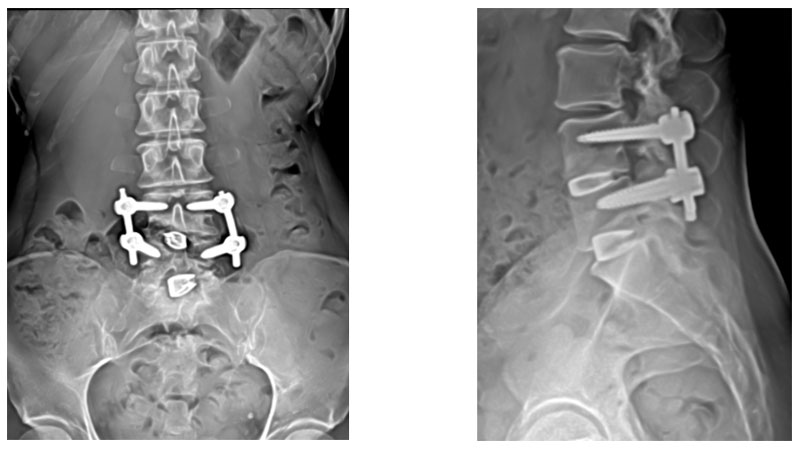
Our patient of the month Keri is a perfect example of this. Keri struggled with low back pain and leg symptoms since 2011. She consulted physical therapists, chiropractors, naturopaths, physiatrists, neurosurgeons, and orthopedic surgeons. She had two epidural steroid injections. She had three spine surgeries. The first surgery was a laminectomy/discectomy at L5-S1. Then fusion surgery at L5 – S1. And six months later, fusion at L4-L5. Despite her exhaustive effort to find relief, Keri continued to suffer with debilitating symptoms.
 This is Keri’s ‘s story:
When we asked Keri why she thought she got results with treatment at Olympic and didn’t get results with her previous treatments and surgeries, she said; “It’s the comprehensive approach. Realizing that one thing affects another, and another… They use many different treatments at the same time. They don’t just treat the symptoms, they find the underlying cause. No other doctor or clinic I’ve seen has ever been able to do that!“
What Keri described is what I call our “secret sauce“. We have treatments that are designed to address different tissues/components of a patients condition. For most complex cases, a successful outcome requires addressing all of the components of the patients condition. For example, Keri’s treatment plan included:
- Adjustments to restore joint motion
- Non-surgical decompression to reduce disc bulging
- Advanced bioelectrical therapy to repair nerve damage
- Trigenics manual therapy to balance muscles
- Pressure wave therapy to release scar tissue
- Non-invasive laser to reduce inflammation and speed repair
- Physical rehabilitation therapy to regain strength and stability
As I said earlier, most people who have suffered with chronic spine related symptoms and exhausted conservative treatment, and didn’t find relief from surgery, think that they have tried everything. That isn’t true if they haven’t tried a comprehensive multimodal treatment approach like we use at Olympic. With this comprehensive treatment approach, we have helped thousands of patients find relief without surgery.
And we have helped hundreds of patients that had failed surgeries find relief. Does this sound too good to be true? It isn’t. As impressive as our results are, we aren’t able to help everyone. There is a point where the damage is so severe that conservative treatment is no longer an option. For those cases, surgery or medication for pain management are the only options.
How do you know if comprehensive treatment can help? A detailed examination and review of imaging is the starting place. There are some findings that are clear indicators that would prevent the use of some treatments. However, for the majority of patients, the answer is only revealed by starting treatment and evaluating the response. That is why we developed our evaluation process that we call checkpoint one and checkpoint two. The first checkpoint is evidence that the patient will respond to treatment.
On the first visit, we retest deficiencies discovered on the initial exam of restricted motion and muscle weakness. We will perform the treatment then retest mobility and strength. The expectation is that the patient will demonstrate improved mobility and strength immediately following the first treatment. If a patient does not demonstrate response to treatment within the first three visits, we would discontinue treatment.
If a patient responds as expected, the second checkpoint is evidence of progress. By or before the end of three weeks of treatment, the patient needs to be able to report to us that they are feeling better, and testing needs to demonstrate objective progression of improvement in strength and mobility.
If a patient cannot report improvement in their symptoms and demonstrate improvement in their function by the end of three weeks, treatment would be discontinued.
No doctor can guarantee the results of their treatment. However, we can guarantee that we will only proceed with treatment if the patient is getting results.
If you know, someone that has had spinal surgery and continues to experience symptoms and limitations to their quality of life, please pass along this information. For that matter, if you know someone that is dealing with chronic spine symptoms and hasn’t had surgery yet and would like to avoid surgery, please pass along this information.
What if there are treatments that could help them feel better, increase their level of function, and help them to regain their quality of life?
Mark Shelley DC, DACNB
Team Member of the Month:
Kaiya
- For being the best manager and teacher ever!!
- Jumping in with all fours getting all the team member reviews all done!